
It’s been a wonderful month in the world of Endometriosis for Australia, leading into the 16th World Congress on Endometriosis which will be held in Sydney from 21-24 May.
A huge win was that the Labor Government was successful in a second term – meaning their commitment to Women’s Health is cemented for the next few years. Refer to to the initial commitment here.
More recently, RANZCOG have updated their clinical guidelines for living with Endometriosis and Adenomyosis. RANZCOG (The Royal Australian and New Zealand College of Obstetricians and Gynaecologists) is a not-for-profit organisation dedicated to high standards of practice in obstetrics and gynaecology.
Clinical guidelines are a “set of evidence-based recommendations to support healthcare professionals” to: make clinical decisions, standardise treatment, reduce variations and most importantly, enhance patient outcomes*.
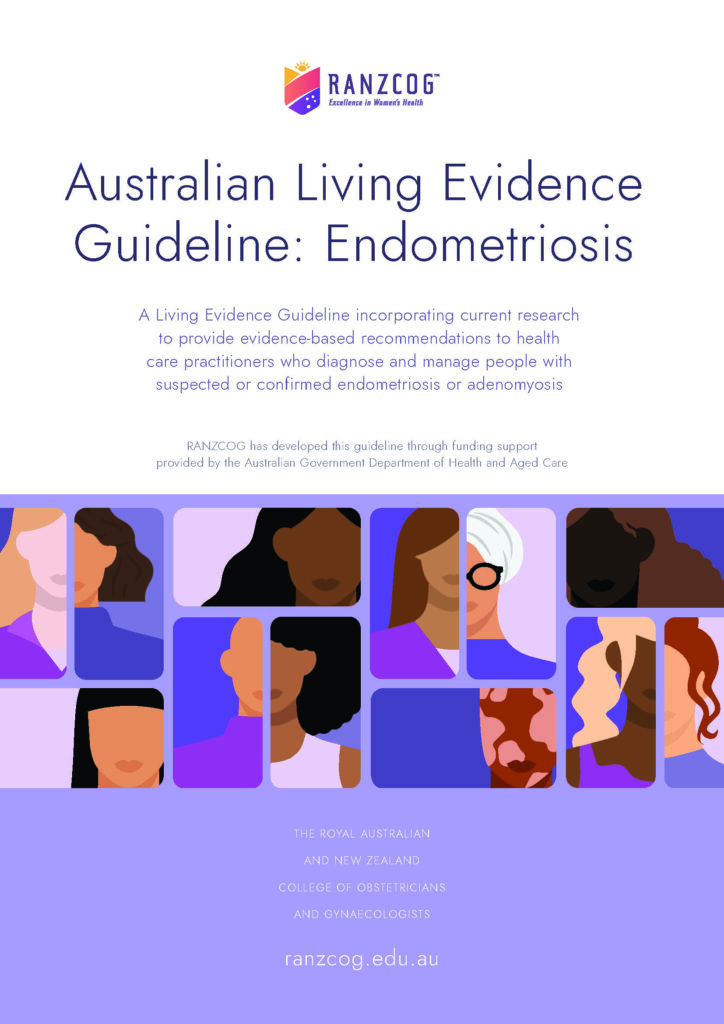
Titled: ‘Australian Living Evidence Guideline: Endometriosis’ this 262 page guideline supersedes the first ‘Australian Clinical Practice Guideline for the Diagnosis and Management of Endometriosis’ that was developed by RANZCOG in 2021. This updated guideline has been developed with the input from a range of sectors: including gynaecologists, primary care providers, physiotherapists, pain specialists and people who live with Endometriosis & Adenomyosis*.
The key takeaways from the Australian Living Evidence Guideline: Endometriosis include:
- There is increasing evidence that scans are now a viable diagnostic tool for Endometriosis and Adenomyosis. Prior, laparoscopic surgery was the gold standard in treatment and diagnosis – but with the increase in research and technology in this sector, new ways to scan have revealed it is possible to locate Endometriosis and Adenomyosis through transvaginal ultrasounds and MRI (magnetic resonance imaging). Which could lead to reducing the time of diagnosis from symptom onset.
- New recommendations have been set that advise General Practitioners to begin hormonal treatments whilst diagnostic investigations are in progress
- A flowchart has been developed for GPs, to assist with accessing evidence-based recommendations for the diagnosis and management of Endometriosis
- There will be new recommendations specifically concerning adolescents
- As well as recommendations for physiotherapy and psychological interventions to assist with the treatment of these conditions
- And there will be a free eLearning module launched in May for multidisciplinary care providers to support the “delivery of consistent, high-quality care across Australia”
These new guidelines cover a many areas, including:
- Signs and symptoms associated with Endometriosis
- Diagnosis of Endometriosis
- Treatment options for Endometriosis
- Surgical options for Endometriosis
- Specific information for adolescents*
For additional resources & information:
More about the Australian Living Evidence Guideline: Endometriosis
The full guidelines can be found here
View the Endometriosis public handout
Try out The Raising Awareness Tool for Endometriosis (RATE) to help identify symptoms
Read about RANZCOG
*Reference: https://ranzcog.edu.au/resources/endometriosis-clinical-practice-guideline/

Author: livingwithsupport
This information is for educational and exploration purposes only and is not medical advice. Please consult your medical professional for advice on your personal situation.